Growing or Groaning?
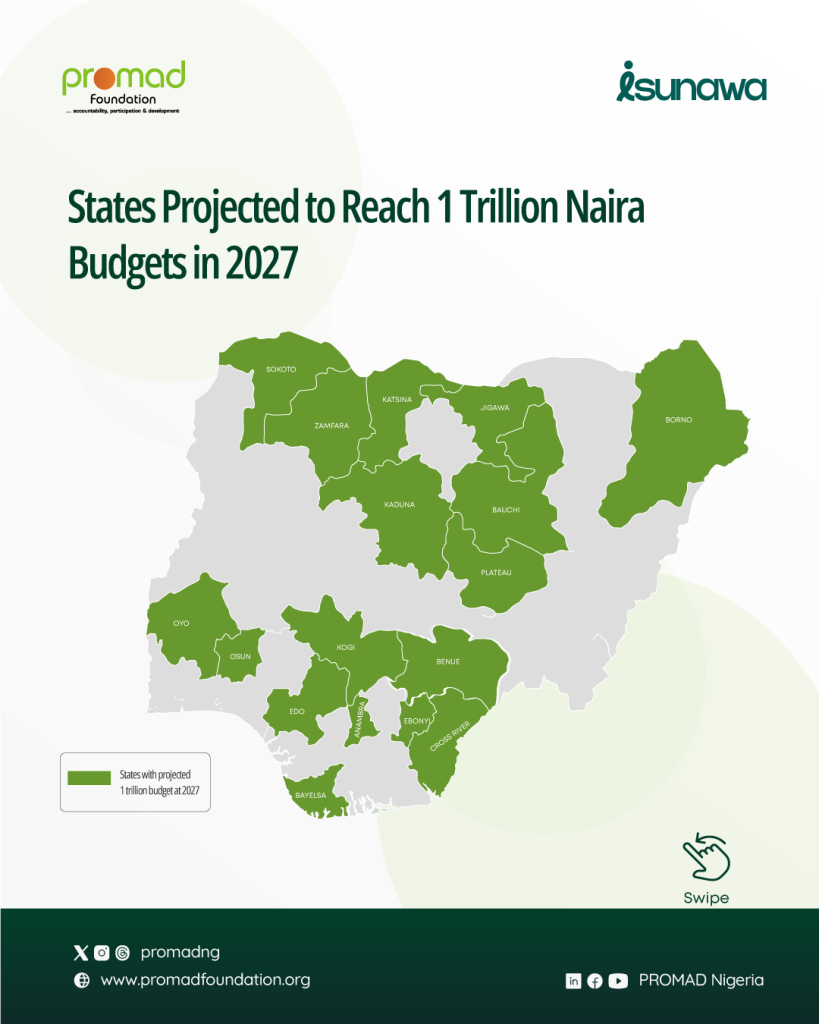
In 2027, over 17 Nigerian states are projected to present budgets estimated at one trillion Naira or more. This comes on the heels of 2026, when 11 states reached this milestone. PROMAD’s close analysis suggests that by next year, as many as 28 states could be operating at or near this ambitious financial threshold, signalling a significant shift in Nigeria’s subnational fiscal landscape. This raises a critical question: Does a larger budget automatically translate into improved infrastructure, better public services, and stronger economic outcomes? Or is this real growth, or a competition in budget inflation driven more by optics than by fiscal reality?
Implications
At the current pace, trillion-naira budgets may soon become the new normal for many states by 2027. Yet Nigeria’s recent fiscal history raises a difficult question: what has been the development return on ever-expanding subnational spending? For years, state budgets have run into hundreds of billions of naira annually, but the evidence of this spending is difficult to see in many parts of the country. Poor road networks, weak education infrastructure, overstretched health facilities, persistent insecurity, and growing salary backlogs continue to define the lived reality of citizens. For many Nigerians, there is a widening disconnect between the scale of public expenditure and actual improvements in welfare and service delivery.
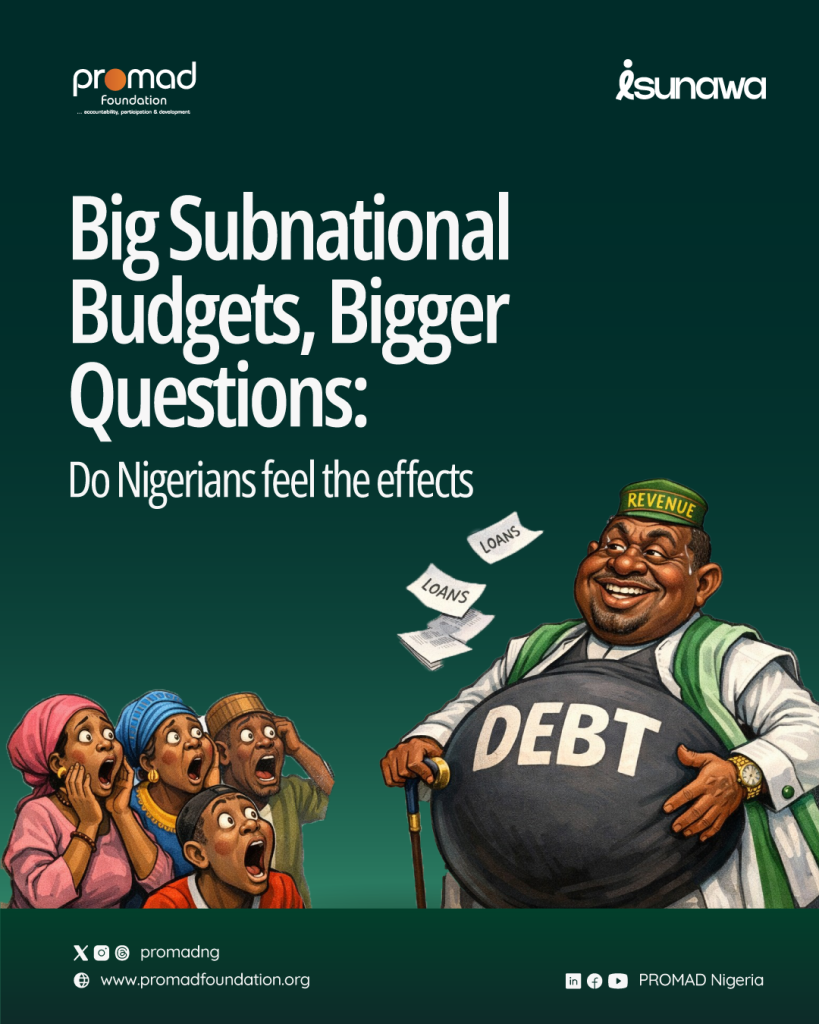
Behind the expansion in budget size lies a more troubling trend — the growing dependence on debt to finance both capital and recurrent obligations. Data from the Debt Management Office shows that external debt obligations of states and the Federal Capital Territory increased from $4.80 billion in 2024 to $4.81 billion in 2025. Domestic debt has also remained persistently high, standing at ₦3.97 trillion in December 2024 and only marginally lower at ₦3.96 trillion by June 2025. The concern is not merely the size of these obligations, but their sustainability, the rising cost of servicing them, and their implications for long-term fiscal stability.
Debt servicing (interest and principal repayments) is already consuming a significant share of subnational revenues, leaving limited fiscal space for investments that directly improve productivity and human capital. External debt further exposes states to exchange rate risk. With a volatile naira, any depreciation immediately increases repayment costs in local currency terms. Recent requests by some states for relief or restructuring of foreign obligations highlight the growing pressure this exposure creates.
This raises a fundamental question: how many states can finance their operations and meet their obligations without borrowing or heavy dependence on federal transfers? Very few. Internally Generated Revenue (IGR) remains weak across most states and, in many cases, is insufficient to cover even a fraction of planned expenditure. The structural problem is clear: subnational spending ambitions are rising much faster than their independent revenue capacity.
Without deliberate reforms to expand the economic base, modernise tax administration, and improve compliance, the movement toward trillion-naira budgets risks being driven more by inflation, exchange rate effects, and borrowing than by genuine economic growth. Over time, this pattern crowds out development spending, reduces fiscal flexibility, and deepens vulnerability to economic shocks.
Sustained expansion financed by debt also raises governance risks, particularly where spending growth is not matched by transparency and oversight. Post-tenure investigations and litigation in several instances have raised questions about the use of public funds. In the absence of strong accountability mechanisms, the race toward larger budgets risks becoming a political signalling exercise rather than a reflection of sound fiscal management and development planning.
Recommendations
With more states likely to move toward trillion-naira budgets in the coming years, attention must shift from the sheer size of expenditure to the credibility and sustainability of fiscal decisions. Budget expansions should be accompanied by greater transparency around the assumptions that underpin them, including realistic revenue projections, borrowing plans, and the economic conditions expected to support growth. Without such clarity, larger budgets risk reflecting ambition rather than actual fiscal capacity.
There is also a pressing need for thorough accountability assessments, particularly of the previous year’s budget implementation, to accurately determine the level of impact achieved before approving further spending or increasing debt profiles. The expansion of new budgets should be anchored in clear evidence showing how past allocations were utilised, the completion status of capital projects, and the measurable outcomes delivered. In the absence of performance reporting, the risks of inefficiency, duplication, and abandoned projects remain high.
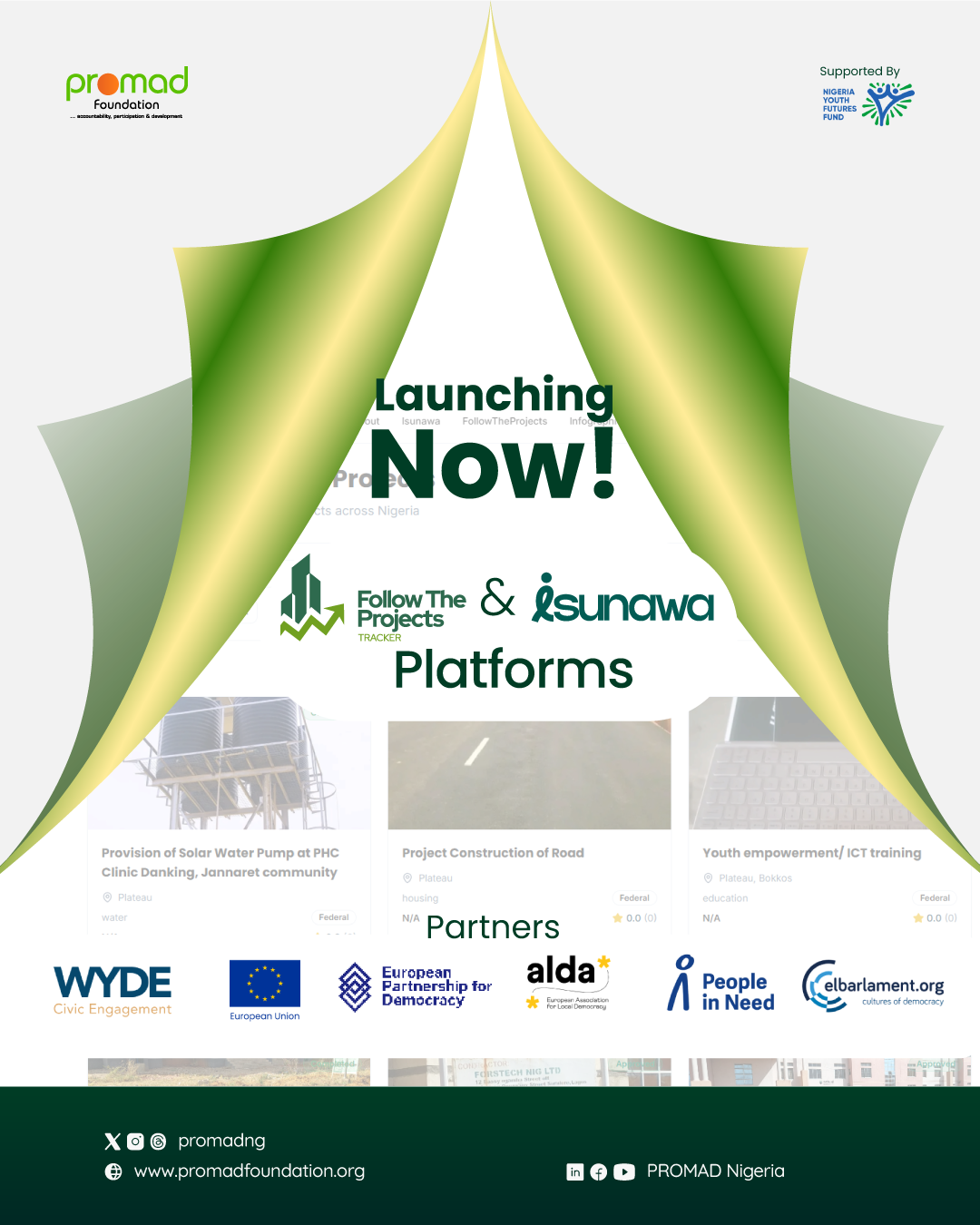
Public confidence in rising budget figures will also depend on the degree to which citizens are meaningfully involved in the budgeting process. Opening fiscal data, strengthening public consultations, and creating structured channels for citizens like Isunawa AI by PROMAD can improve priority setting and help ensure that growing expenditures respond to genuine development needs across communities.
Ultimately, the sustainability of trillion-naira budgets will depend on states’ ability to strengthen their internal revenue base. As already mentioned, many Nigerian states remain heavily dependent on external transfers to meet basic obligations. Strengthening internally generated revenue through improved tax administration, digital revenue systems, and policies that expand the local economic base is therefore essential. Without stronger domestic revenue mobilisation, continued reliance on borrowing will deepen fiscal pressures and constrain future development choices.