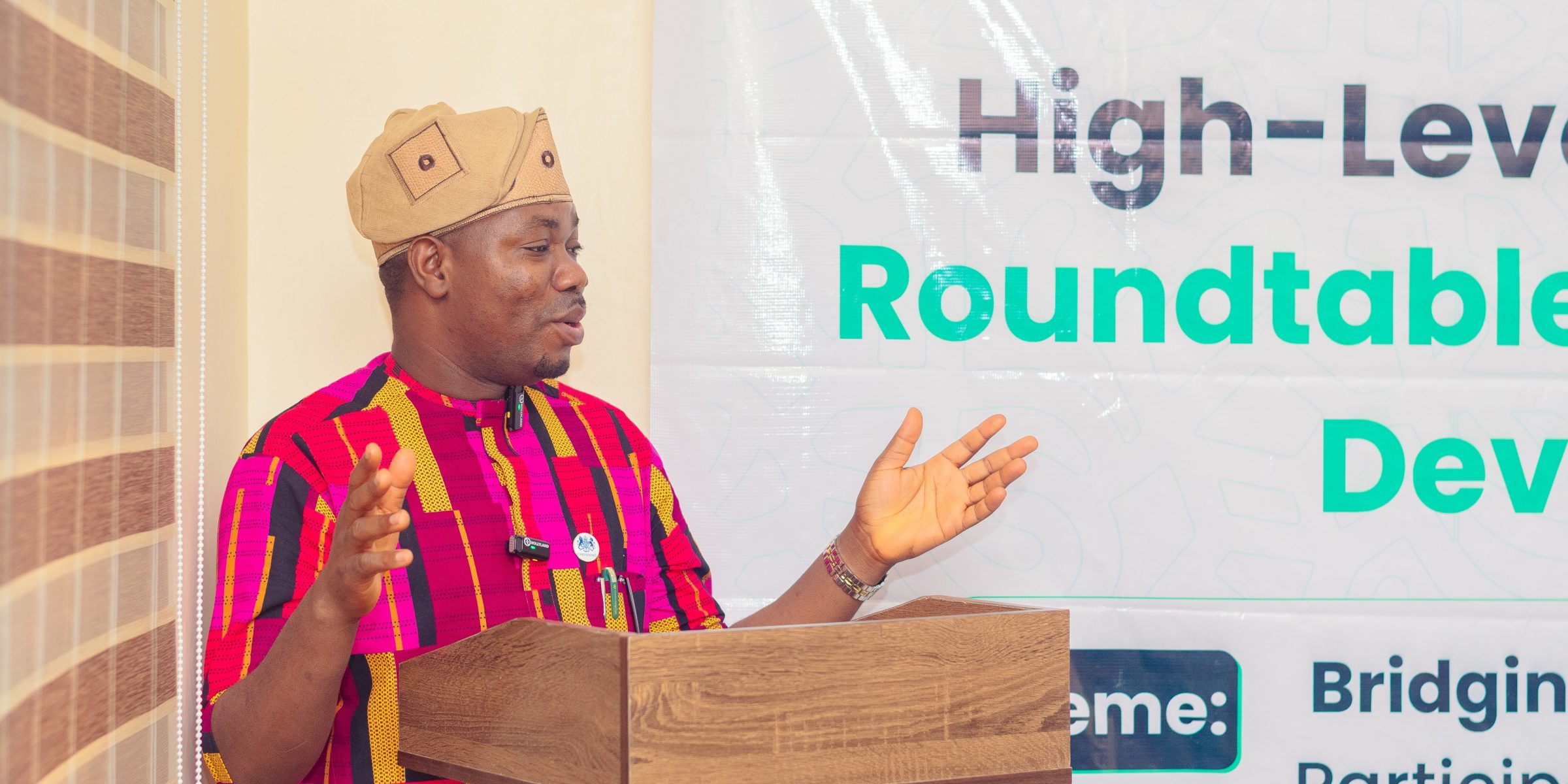
A KEYNOTE DELIVERED BY DAISI OMOKUNGBE AT THE YOUTH, CSOs AND MEDIA ROUNDTABLE ON YOUTH, TECHNOLOGY AND DEVELOPMENT IN NIGERIA, HOSTED BY PROMAD INFOTECH FOUNDATION, SUPPORTED BY THE NIGERIA YOUTH FUTURES FUND (NYFF) HELD IN ABUJA ON TUESDAY, 31ST MARCH 2026
Distinguished guests from the government,
Esteemed colleagues from civil society and media,
Innovators, young leaders,
Ladies and gentlemen,
Good morning.
It is both an honour and a responsibility for nation-building to stand before you today at this important roundtable convened by PROMAD—an organisation that has consistently demonstrated that governance works best when citizens are not just heard, but actively engaged.
We are gathered under a powerful and urgent theme: “Bridging the Gap: Leveraging Technology for Citizen Participation and Development.”
And my task today is to set the pace for today’s conversation with my keynote on “Youth Participation, Civic Technology and Nigeria’s Development Futures.”
1. The Defining Moment for Nigeria’s Youth
This roundtable is one of the defining moments for Nigerian youth. Nigeria is not just a country with a large youth population—Nigeria is a youth nation.
According to the National Population Commission (NPC), over 60% of our population is under the age of 30. The future of development, governance, and democratic accountability should not be decided in isolation from young people—it will be determined by them.
Yet, there remains a fundamental paradox:
Young people are digitally connected, informed, and expressive
But structurally excluded from governance processes
Highly innovative, yet underutilised in public decision-making
Politically aware, but often institutionally disengaged
This gap—between potential and participation—is where civic technology solutions, products and initiatives must intervene in order to redefine our realities and position for the future.
2. Civic Technology: From Tools to Transformation
Today, PROMAD is projecting civic technology and GovTech as part of what Nigeria must begin to harness. Civic Tech is often misunderstood as simply “apps” or “platforms.”
But in reality, civic tech is about power redistribution.
It is about using digital tools to:
- Increase transparency
- Strengthen accountability
- Deepen citizen engagement
- Improve service delivery
- Enable data-driven governance
- Across Nigeria, we are already seeing promising signals—but efforts must be combined to align.
But let us be clear:
Technology alone does not drive change—participation does.
And participation must be intentional, structured, inclusive and enabled.
3. Youth as Architects of Governance Innovation
Young Nigerians are not just beneficiaries of development—they are architects of innovation.
However, three systemic constraints persist:
- Access Gap
- Trust Deficit
- Institutional Resistance
Nigeria’s development futures deserve our worthy effort and seriousness; stakeholders must systemically address these constraints.
4. Reimagining Participation: From Tokenism to Co-Creation
We must move from tokenism to co-creation.
This means:
- Designing policies with young people, not just for them
- Institutionalising digital feedback loops
- Integrating civic tech platforms into government systems (PROMAD Isunawa AI) is ready for this.
- Recognising youth-led data in decision-making
- Participation must be embedded, not just to satisfy political scores.
5. Strategic Role of Civic Tech
The strategic role of civic tech is important in shaping participation, data collection and improving outcomes by:
- Enhancing transparency
- Strengthening accountability
- Improving service delivery
- Enabling inclusive governance
- Driving policy innovation with data
6. A North Central Lens
Governments and stakeholders in the North Central region can make the region a model for civic-tech-driven governance by:
- Establishing innovation labs, just like PROMAD’s StackLabs, which is gradually coming up, supported by NYFF.
- Partnering with CSOs and media
- Deploying participatory platforms, such as PROMAD’s Isunawa platform.
- Investing in digital literacy—for youth and women (young girls), civil servants and the private sector.
7. Stakeholder Roles
- The government must open up systems
- Civil society must work together to scale solutions
- Media must partner to amplify accountability
- The private sector must invest—putting local CSR resources in the hands of those who will use them judiciously.
- Youth must move beyond tokenism and aspire to lead
8. From Conversation to Commitment
We must dialogue, but also ensure actions that will guarantee delivery.
9. Closing
Nigeria’s future will be built through active citizens, responsive institutions, innovative technologies, and courageous leadership. You can find these attributes in Nigeria’s young people.
- Young people are ready.
- The tools are available.
- The urgency is undeniable.
- What remains is the collective will to act.
- Let us bridge the gap.
- Let us build systems that listen, and so we can harness insights and advance to predictive governance.
Let us design a future where participation is not just for political purposes but a core foundation.
Thank you.
Daisi M. Omokungbe, Executive Director, PROMAD